Great Son of Africa
Love, moral courage and sheer daring
Based on the true story of how Bram and Molly Fischer defied one of history’s most powerful tyrannies, Great Son Of Africa brings to light one of the greatest unsung heroes of the twentieth century.
A profound tale told with the pace and intensity of a thriller.
“Bram Fischer saved both of us, Nelson Mandela and our comrades at the Rivonia Trial, from the gallows.
“Had it not been for Bram, the new South Africa may never have been born.
“It is by no means over-stating the importance of Bram to say that as well as being a great activist he was one of the most revered of all South Africans.
“Bram Fischer was loved by all of us.”
Denis Goldberg and Andrew Mlangeni,
Rivonia Trial defendants
Film Outline
It’s the 1960s, Bram Fischer is the gifted son of an Afrikaner dynasty. He’s a Rhodes scholar, Queen’s Counsel, a man destined for high office.
But this gilded member of the ruling elite and his brilliant wife have decided apartheid is an injustice that must be actively opposed. Bram is a leading member of the banned resistance movement, the ANC, and when security forces carry out a raid on its secret headquarters his life is turned upside down.
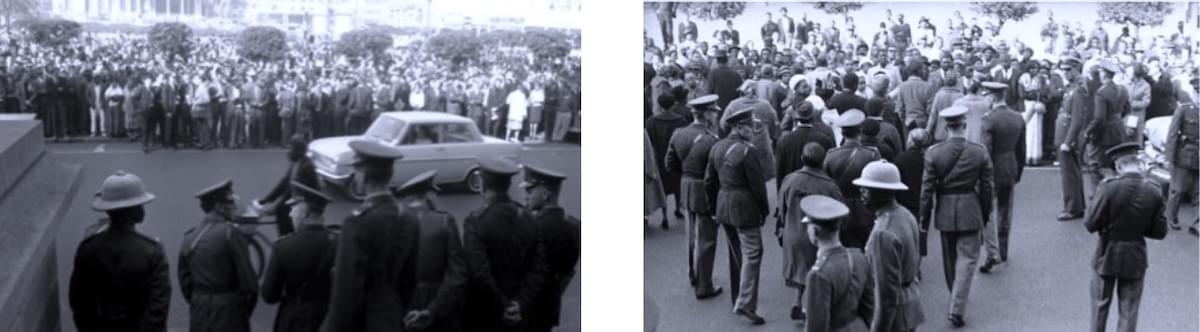
All leading ANC members are arrested and arraigned for trial. Except Bram. Fearing his social status and international legal reputation, the regime offer the Fischers a comfortable exile in Britain. Bram and Molly refuse – and in an act of astonishing courage and brinkmanship, they decide not only to stay but that Bram, the outstanding trial lawyer of his generation will lead the defence team. In doing this, he and Molly are gambling on their belief that the arrest of the lead counsel in the show-trial of the century would blow its creditability. Besides, Percy Yutar, leading counsel for the prosecution has an overwhelming case and the regime confidently expects the death sentence for all defendants. Thus, the Fischers believe they have immunity – but only until the end of the trial, when Bram and Molly know the security forces will come for them. And then, Bram will face the death penalty along with his comrades.
Act 1 brings us to the Fischers’ decision.
Act 2 is the trial itself and Bram’s brilliant defence mounted through close teamwork with the defendants and in particular with Defendant Number One, Nelson Mandela. Bram’s performance is so forensic and devastating that, with the world looking on, the court is compelled to impose life-sentences rather than death. Yutar is devastated. The courtroom erupts.
The defendants and their supporters are jubilant. One defendant, Denis Goldberg, shouts through the din to his anxious, hard-of-hearing mother: “It’s life, Ma! Life is wonderful!!” The very next day, knowing arrest might be imminent, Bram and Molly head to Cape Town to celebrate their daughter’s 21st birthday. On the way, Molly is killed in a freak road accident.
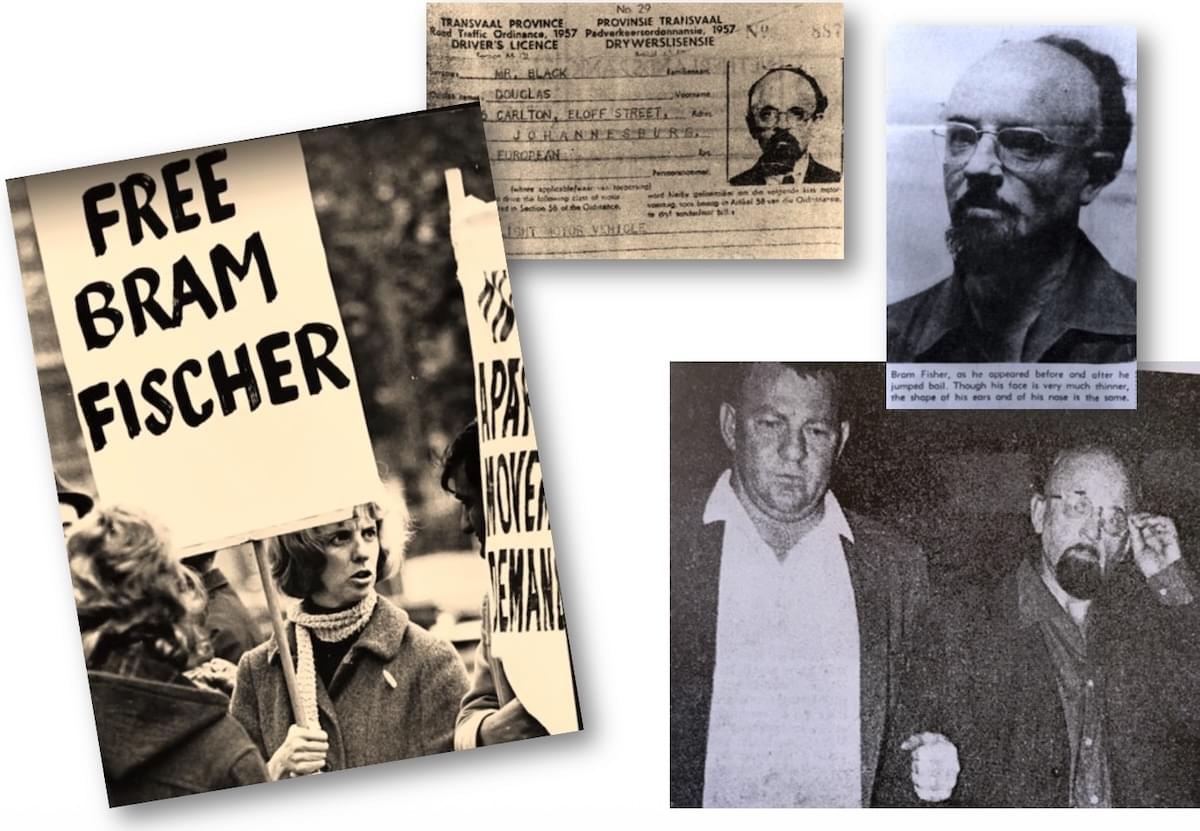
Act 3 sees Bram drawing on all his moral strength to make his and Molly’s sacrifice, and that of his three children, even more meaningful. To his surprise, Bram is again offered exile, and again refuses, instead he chooses to go underground and continue the struggle, totally transformed under the guise of “Mr Douglas Black”. Molly died in South Africa and so will Bram. After a year on the run he is finally arrested and faces trial in the same courtroom where he saved his comrades from certain death. There are no co-accused. Bram stands alone in the enormous dock. He knows he, too, will either hang or go to prison for life.
But there’s still one last, uplifting act of defiance to come, which inspires Nelson Mandela’s passionate tribute from Robben Island:
“Hail to thee, Bram! Great Son of Africa”
Director’s Vision Statement
The past is a different country, they say. They do things differently there. But sometimes the past rears up and shouts, with a message so urgent it demands to be heard.
Great Son Of Africa is one of those cries.
In fractured and self-interested societies like those in Europe and the US right now a film about Bram Fischer, a man who could have aligned himself with the ruling regime and stayed silent in the face of apartheid but who stood up for the rights of his fellow men in spite of the fact that he could lose everything, is exactly the film we need now.
It follows in a long line of powerful films that pursue this theme such as Schindler’s List or To Kill A Mockingbird, and Bram Fischer is a character as fascinating and noble as Oskar Schindler or Atticus Finch.
Bram trained as a lawyer and quickly gained a stellar reputation - people talked of Lord Justice or even Prime Minister - but in spite of Bram’s devotion to the law in our film he learns that when the law itself is unjust the only moral response is to break it, even if that means paying the ultimate price.
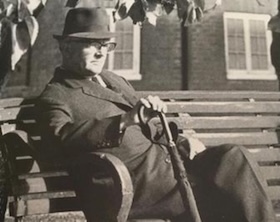 But any hero is only as good as the antagonist he faces and the character of Johannes Viktor is the perfect nemesis. A white Afrikaner like Bram, they could have so much in common, but Viktor is a loyal servant of the apartheid state which leads him to commit unforgivable atrocities in the name of his “justice” and for whom the hunt for the treacherous Bram becomes an obsession. Viktor stands as a direct mirror to Bram, both fiercely intelligent, both utterly committed to their cause and both fuelled by a determination to end this struggle for their side. One could so easily have been the other and this makes for a titanic battle that will play out across political lines. When Viktor finally arrests the fugitive Bram he believes he has won, but we know it’s a pyrrhic victory and that Bram has done enough to seal the downfall of Viktor and the regime he stands for.
If Viktor is his nemesis, Bram’s wife Molly is his moral north star. Having been sweethearts since their youth she is able to steer Bram when he can no longer see the clearest path forward and her own bravery in the face of the state’s loathsome bullying is unquestionable. When Bram tragically loses her at the conclusion of the trial it is heart-breaking, both for him and for us, and forces him to find his own way to his destiny. This beautiful love story is the beating heart of this film.
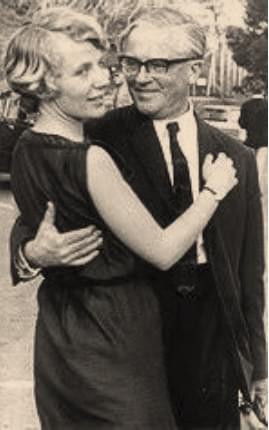 Two great leads in Bram and Molly and a fantastic antagonist in Viktor provide us with a characterful window into real events and three opportunities for casting at the highest level. They are surrounded by a host of other fascinating characters, not least among them Nelson Mandela, Walter Sisulu and legendary lead prosecutor, Percy Yutar who we meet at a crucial point in their own stories and who all have their own arcs freighted with historical significance.
Because the stakes – personal, political and historical – are so high for these characters every frame of this film will exude tension. To make that tension inescapable and it drive home the mis-en-scene, camerawork, lighting and performances will all convey the utmost realism delivering terrifying interrogations, relentless manhunts and heart stopping courtroom drama. Hand held, intimate portraits enable us to identify with Bram so that his every thought, every breath and every heartbeat is palpable for the audience enabling us to identify with Bram in his pain, his courage and ultimately his triumph.
All this will be counterpointed with expansive vistas that reveal the majesty of South Africa’s high veldt, its valleys and escarpments which Bram loved so deeply but in which the abomination of corruption has taken hold.
In a world of fake news, true stories have a special potency for audiences who crave the moral authority they can deliver. Few films express that authority with the clarity of Great Son Of Africa and that is why I am making it my next film.
“Bram Fischer and I rejected the notion that our political rights were to be determined by the colour of our skins. We embraced each other as comrades, as brothers, to fight for freedom for all in South Africa, to put an end to racism and exploitation.
“To be ostracised by his own people, Bram showed a level of courage and sacrifice that was in a class by itself. I fought only against injustice, not against my own people.
“Bram Fischer. The people of South Africa will never forget him. He was among the first bright beacons that attracted millions of our young people to fervently believe in a non-racial democracy in our country.
“A man of such extraordinary courage, wisdom and generosity that his like may never be known again.”
Nelson Mandela
The Cast
The Fischer Family
- Bram Fischer
- Molly Fischer
- Paul Fischer
- Ilse Fischer
- Ruth Fischer
The Defence Counsel
- Joel Joffe
- Arthur Chaskalson
- George Bizos
The Rivonia Trial Defendants
- Nelson Mandela
- Walter Sisulu
- Bob Hepple
- Andrew Mlangeni
- Lionel Bernstein
- Denis Goldberg
- Ahmed Kathrada
- Raymond Mhlaba
- Govan Mbeki
- Elias Motsoaledi
The State Police
- Hendrick Van Den Bergh
- Captain Johannes Viktor
- Judge Quartus De Wet
Counsel for the Prosecution
- Percy Yutar
Captured Operatives
- Bruno Mtolo
- Patrick Mthembu
- Petrus Beyleveld
Featured cast members
Hugh Bonneville – Bram Fischer
Hugh Bonneville brings steel and warmth to the role of Bram Fischer.
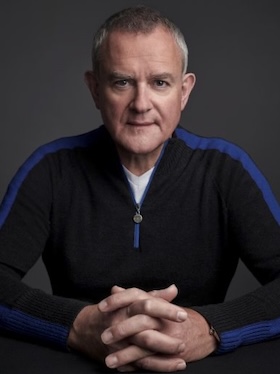
His debut film was 1994's Mary Shelley’s Frankenstein with Robert De Niro and Kenneth Branagh. His early roles include Bernie in Notting Hill (1999) and Mr Rushworth in Mansfield Park (1999).
In Iris (2001), he played the young John Bayley opposite Kate Winslet, with his performance lauded by critics and receiving a BAFTA nomination for Best Supporting Actor.
From 2010 until 2015, he appeared in the ITV period drama Downton Abbey, as Robert, Earl of Grantham.
Bonneville played Mr. Brown in the 2014 film Paddington and its equally successful 2017 sequel Paddington 2.
In 2017, he also portrayed Lord Louis Mountbatten in director Gurinder Chadha's film Viceroy’s House, depicting the tumult and violence surrounding the Partition of India during the final days of British rule.
In 2018, it was announced that Bonneville would play Roald Dahl in an upcoming biopic about the author An Unquiet Life, currently in pre-production.
2019 saw Downtown Abbey and Hugh’s role as Robert Crawley, Earl of Grantham successfully brought to the big screen with gross worldwide box office sales currently at $179m.
Emily Watson – Molly Fischer
Emily Watson has a long and highly acclaimed, award winning career starting in theatres and subsequently moving to cinema and television.
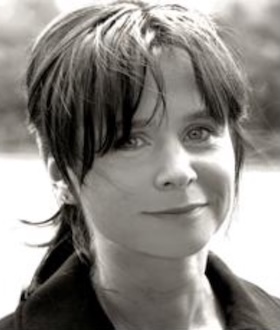
She was virtually unknown on screen until director Lars von Trier chose her to star in his controversial film Breaking the Waves (1996). Her performance as Bess McNeill won her the Los Angeles, London and New York Critics' Circle Awards, the US National Society of Film Critics' Award for Best Actress, and an Oscar nomination.
Emily’s next film, Hilary and Jackie, saw another Academy Award nomination as she captured the soul of troubled genius, Jacqueline Du Pre.
In 2004, she received a Golden Globe nomination for her performance as Peter Sellers first wife, Anne Howe, in the HBO film The Life and Death of Peter Sellars. 2005 saw her star in four films: Wah-Wah, Richard E. Grant’s autobiographical directorial debut; Separate Lies, directed by Gosford Park writer Julian Fellowes; Tim Burton's animated film Corpse Bride, with Johnny Depp and Helena Bonham Carter; and John Hillcoat’s Australian-set “western”, The Proposition.
In 2010, she starred in Oranges and Sunshine, a film recounting the true story of children sent into abusive care homes in Australia, directed by Jim Loach, and the following year (2011) in War Horse, an adaptation of Michael Morpurgo's prizewinning novel, directed by Steven Spielberg. In 2011, she played Janet Leach in the ITV two-part film Appropriate Adult, about serial killer Fred West, for which she won a BAFTA.
Most recently Emily played the pivotal role of Ulana Khomyuk in the 2019 critically acclaimed and Emmy award winning historical television mini series Chernobyl.